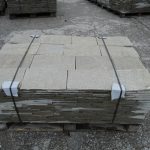
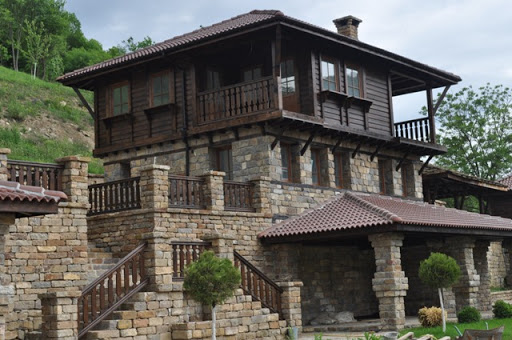
Stone cladding with Bulgarian National Revival character
Old houses with stone walls have an enduring appeal. Their beauty comes from the natural character of the stone, while their survival demonstrates the potential longevity of well-built stonework exposed to the weather.
Thermal comfort in an old house depends on the complete construction, wall thickness, roof and use. Thin stone cladding is not equivalent to a thermal insulation system.
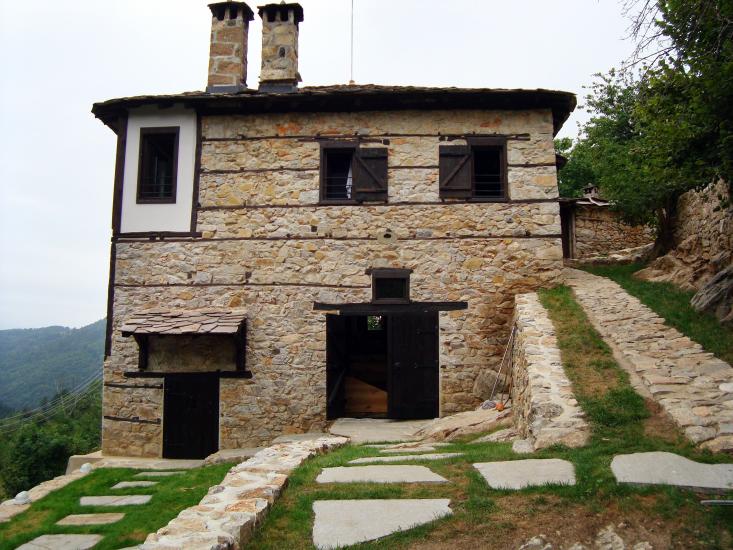
Make use of natural stone’s beauty
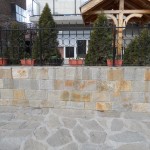
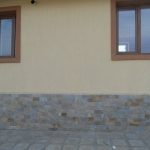
Ivaylovgrad stone can create attractive, lasting wall finishes. Its natural appearance can connect a country house or holiday home with the surrounding landscape. In a town, stone cladding can provide a distinctive feature against the urban backdrop. Even cladding a lower wall section or the wall around the entrance can transform a building’s appearance.
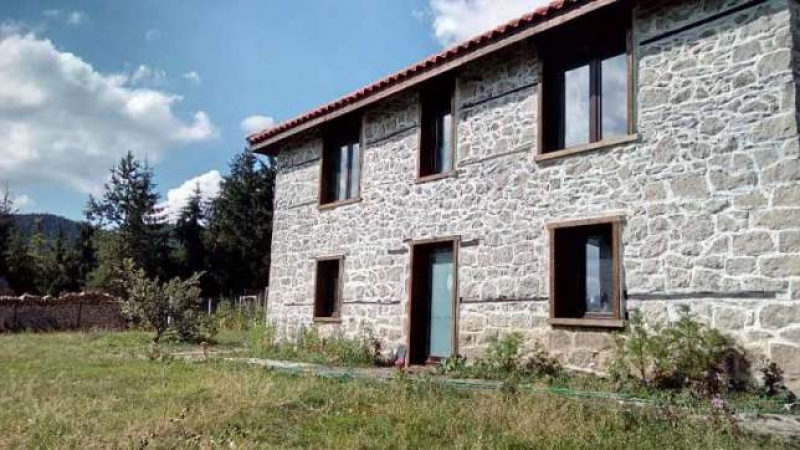
The appeal of gneiss as a cladding stone
Marble and granite, especially when polished, tend to create a more formal impression. Gneiss has a versatile appearance that can suit a town house, holiday home or rural property.
During house construction in a Bulgarian National Revival style, coordinate cladding with the proportions, windows, roof and façade details.
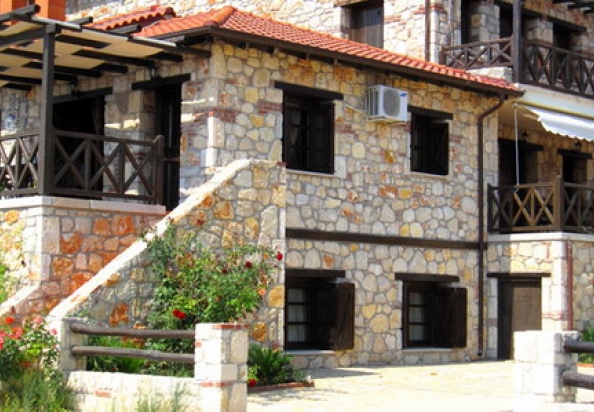
Gneiss cladding colours
Colour depends on mineral composition and changes within the rock. Choose silver grey or golden beige shades by examining samples. Colour alone does not establish the presence of only iron or only quartz.
Sawn stone or irregular slabs?
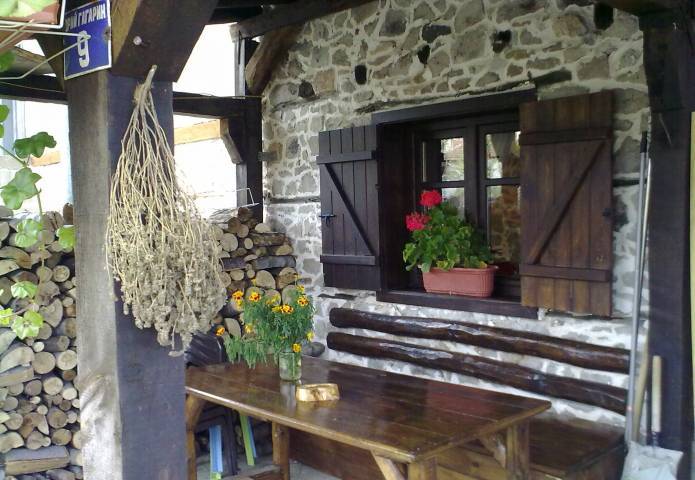
The choice depends on your preferences and the desired installation approach. Sawn pieces have regular outlines, while irregular slabs retain their natural shapes. Fitting irregular pieces is therefore more demanding and takes longer. Their varied outlines, however, can recreate the character of older Bulgarian houses.
When installing stone cladding and paving, coordinate slab shape with the substrate, details and fixing system.
Strength and long-lasting cladding
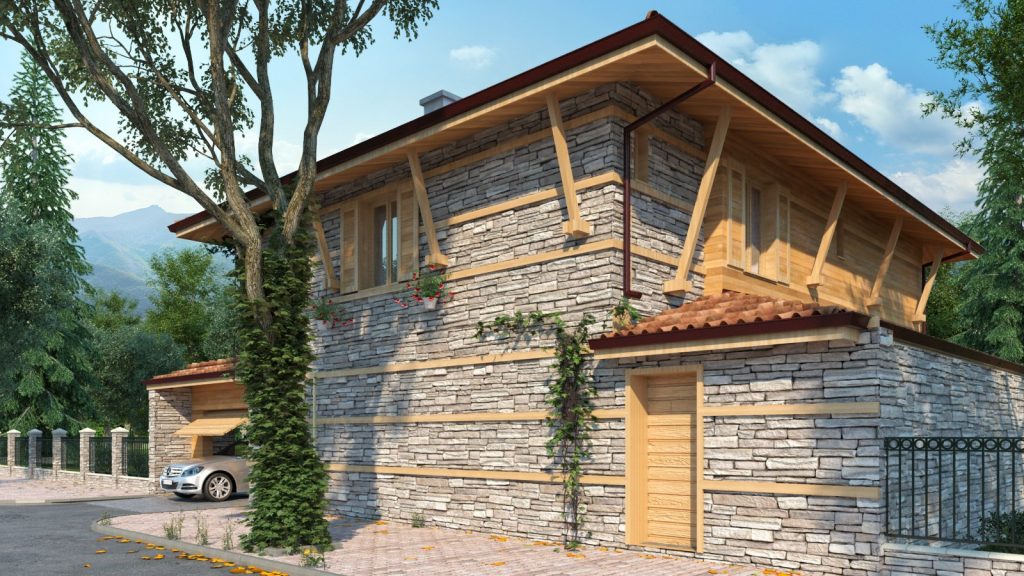
Assess durability from the properties of the particular stone and correct fixing. Quarrying depth alone does not guarantee freedom from cracking or crumbling.
For an external façade, check suitability for moisture and frost rather than assuming general resistance to every temperature change.
Cleaning products and thermal exposure must suit the particular system. A natural origin does not provide unlimited chemical or thermal resistance.
Cleaning, levelling and priming the walls
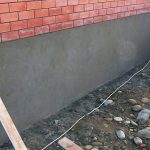
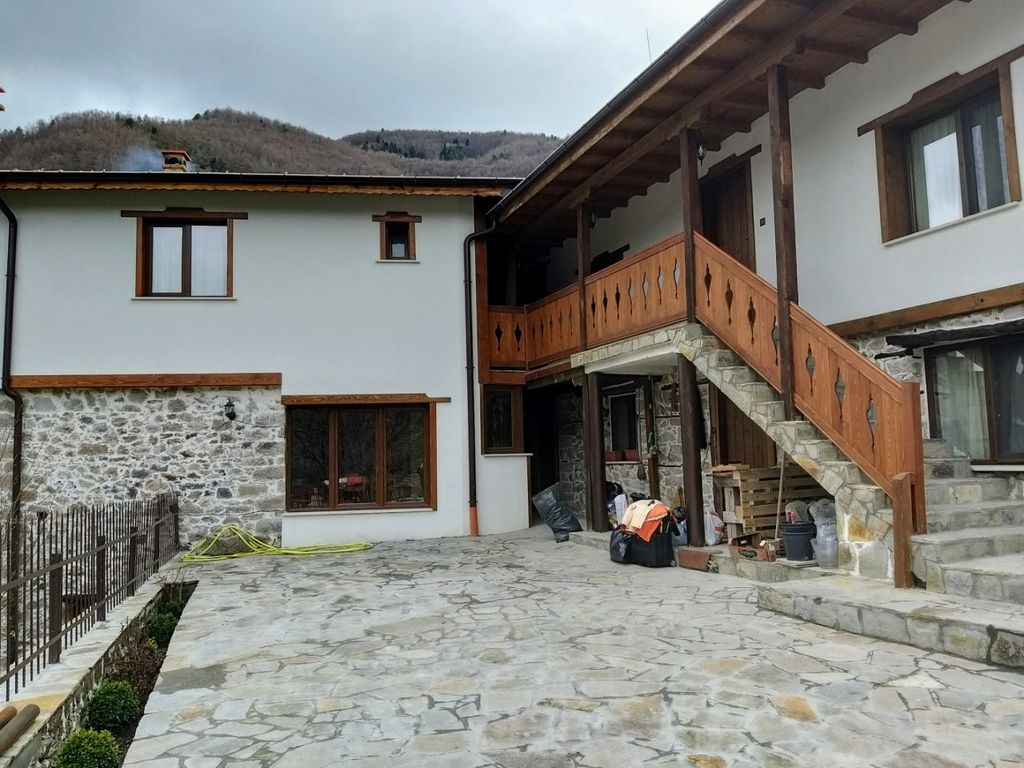
Before fixing gneiss slabs, prepare the wall and apply the appropriate primer. Clean it thoroughly first and fill uneven areas with a suitable levelling product. The bonding surface needs to be even and dry for secure adhesion.
Where a façade has thermal insulation, assess the suitability of stone cladding and its fixing for the complete system. An ordinary skim coat is not automatically a suitable load-bearing substrate.
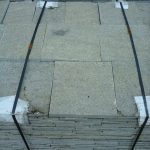
Removing dust from the gneiss slabs
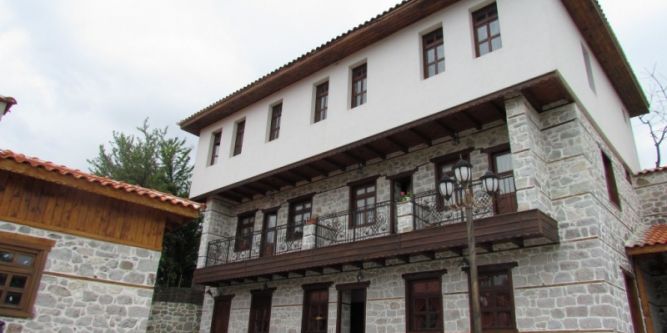
Slabs stored outdoors may become dusty. Wash them and allow them to dry so that they are clean before fixing. This also contributes to a sound bond.
Leave joints between slabs
Leave joints of a few centimetres between the slabs. Once all the pieces have been fixed, fill the joints with grout.
Request a quote
For a stone cladding or paving installation, send us details of your project, its location and approximate area. We will discuss the preparation needed and the scope of work.